

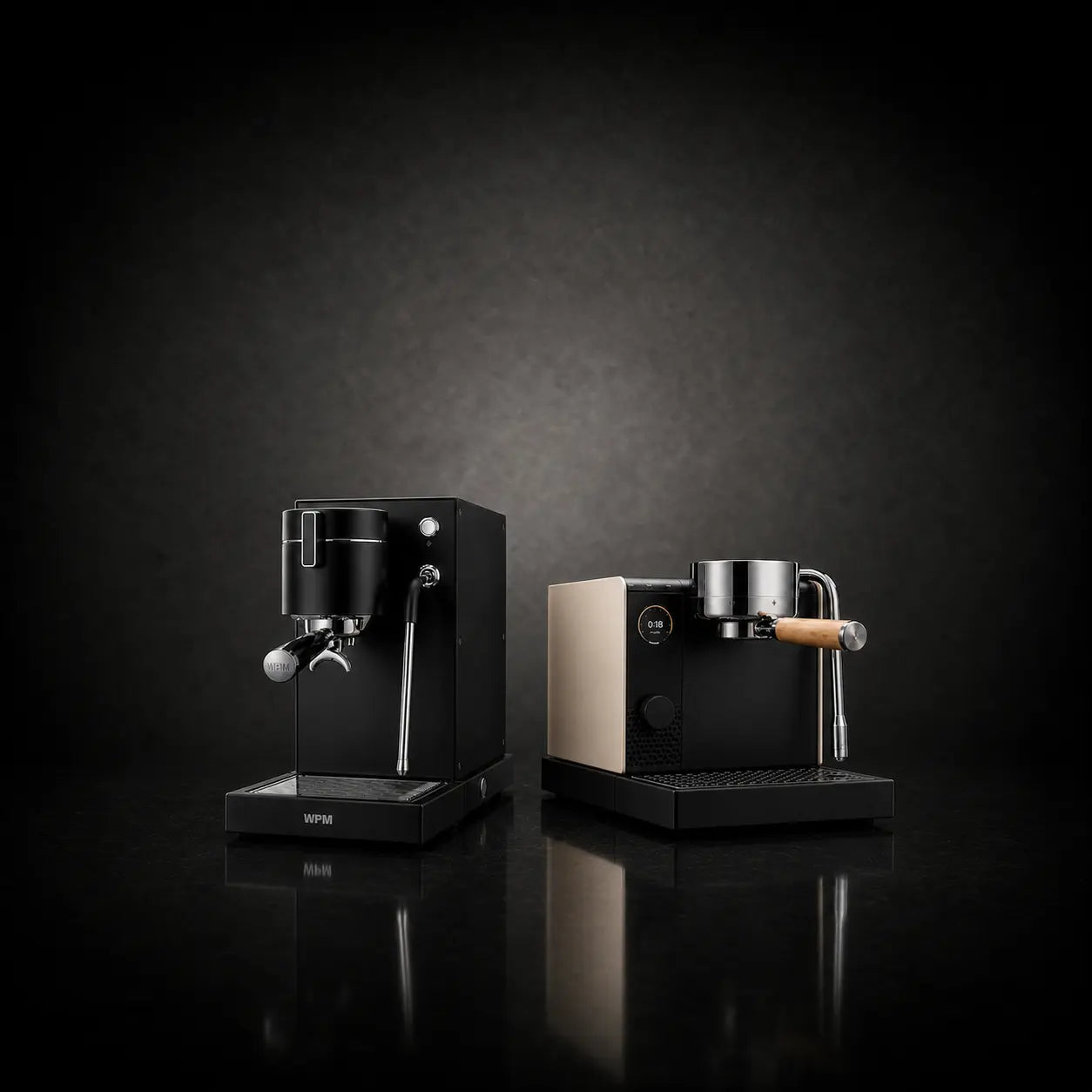
TL;DR
Fellow Series 1 vs WPM Primus : Fellow (€1,499) vs Primus (€1,990) they take opposite routes to the same thing. The Fellow is a polished, app-guided plastic appliance that makes profiling easy if you're new to it. The Primus goes the other way: a metal body, a gear pump, controls on the machine, plumb-in, and enough room to grow into over years. For one machine you'll keep long-term, we lean Primus. As a friendlier, cheaper first step, the Fellow.
Fellow Series 1 vs WPM Primus which should you buy?(summary 1 min read)
If you want one espresso machine you'll keep for years, get the WPM Primus (€1,990). You're paying for a commercial-grade gear pump, a stainless-steel body, and the option to plumb it into a water line. That's what makes it last, and it's what makes the pressure profiling more precise. The Fellow Series 1 (€1,499) is the easier place to start, though. It walks you through shots with an app and on-screen feedback, so the learning curve is a lot gentler.
Both launched in 2025, both are hybrids rather than true dual boilers, and both pull café-quality espresso. What actually separates them is the pump, the body, the heating, and how you control a shot.
| Spec | Fellow Series 1 | WPM Primus |
|---|---|---|
| Price (Vellutto) | €1,499 | €1,990 |
| Pump | Vibration (~9 bar) | Commercial gear pump |
| Body | ABS plastic | Stainless steel |
| Brew + steam at once | No (fast switch) | Yes |
| Max brew temp | 94°C | 98°C |
| Control | App + LCD | On-machine, no app |
| Plumb-in | No | Yes |
Which is better for light roasts? The Primus. It hits 98°C where the Fellow caps at 94°C, and its gear pump gives you the gentle pre-infusion that dense light roasts want.
Which is better for beginners? The Fellow. The app and guided feedback smooth out the learning curve, and you'll pay about €380 less for it.
Bottom line: if this hobby is going to stick and you want hardware that won't hold you back later, the Primus is worth it. If you just want a polished, low-stress machine to start on, go Fellow. And either way, your grinder, beans, and technique do more to the cup than the machine ever will.
On this page
What's the right first espresso machine if I'm just starting out?
If you are just starting your coffee hobby, the right machine is the one that matches how deep you plan to go, not the one with the longest spec sheet. Beginners who want a guided, low-stress entry should look hard at the Fellow Series 1. Beginners who already suspect this hobby will stick should consider stretching to the WPM Primus so they don't outgrow their first machine in a year.
Here's the thing nobody tells you on day one. The machine matters less than your grinder, your beans, and your technique. A 2023 study in the journal Foods found that your brew ratio (the weight of coffee to liquid espresso) affects the cup more than flow rate, grind, or temperature combined. So whichever machine you pick, your early wins will come from dialing in grind and ratio, not from chasing pressure curves. Both of these machines let you ignore profiling at first and switch on a simple preset while you learn. That matters more for a beginner than any single feature.
The difference shows up later. The Fellow holds your hand: it ships with guided shot feedback that suggests grind changes, and an app that walks you through profiles. The Primus hands you the controls and trusts you to learn them. Neither approach is wrong. One is a friendly on-ramp; the other is a machine you settle into.
Fellow Series 1 vs WPM Primus: what's actually different?
The Fellow Series 1 and WPM Primus differ in four ways that decide everything else: pump type, body material, heating system, and how you control a shot. The Fellow uses a vibration pump in a plastic body with a guided app. The Primus uses a commercial-style gear pump in a stainless-steel body with on-machine controls.
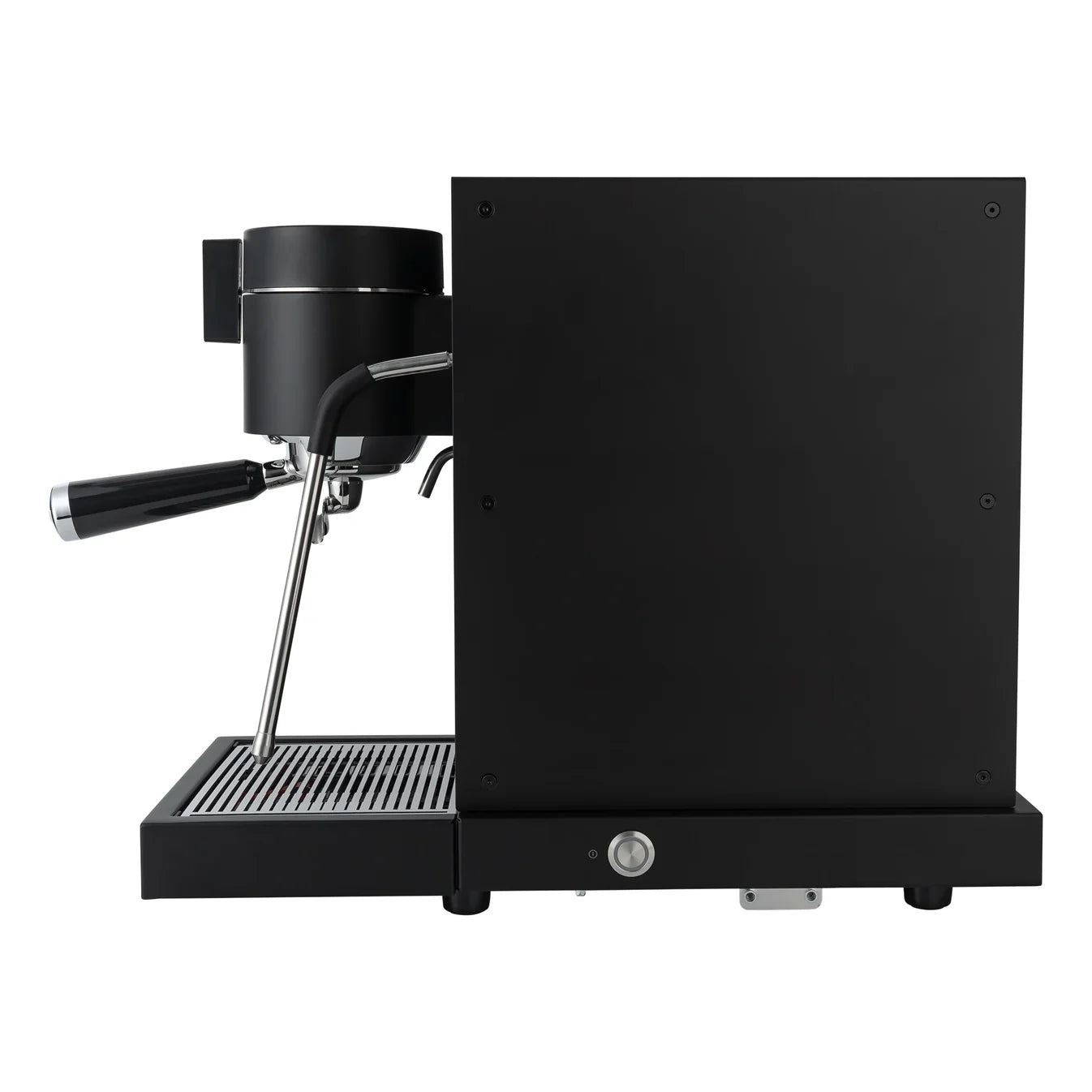
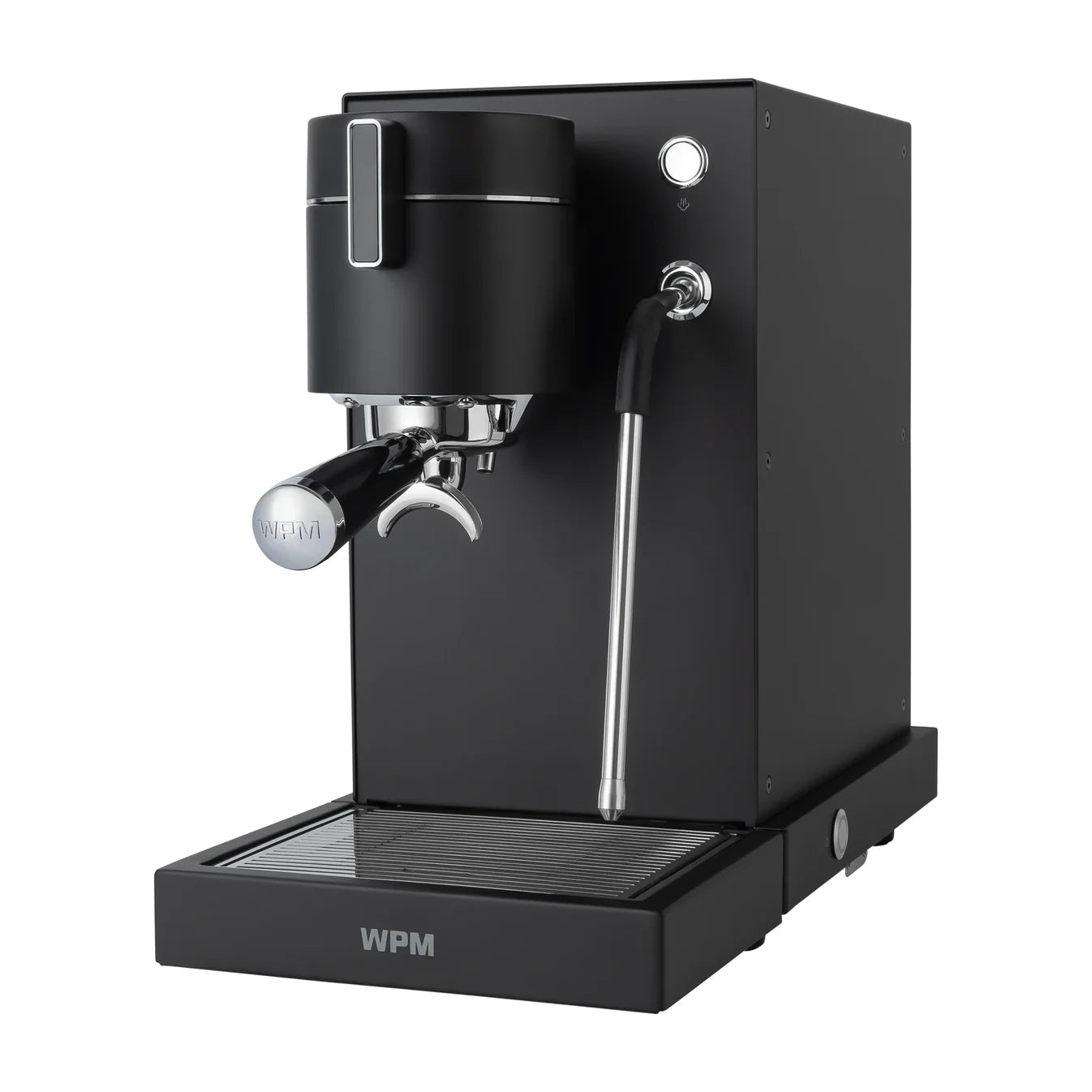
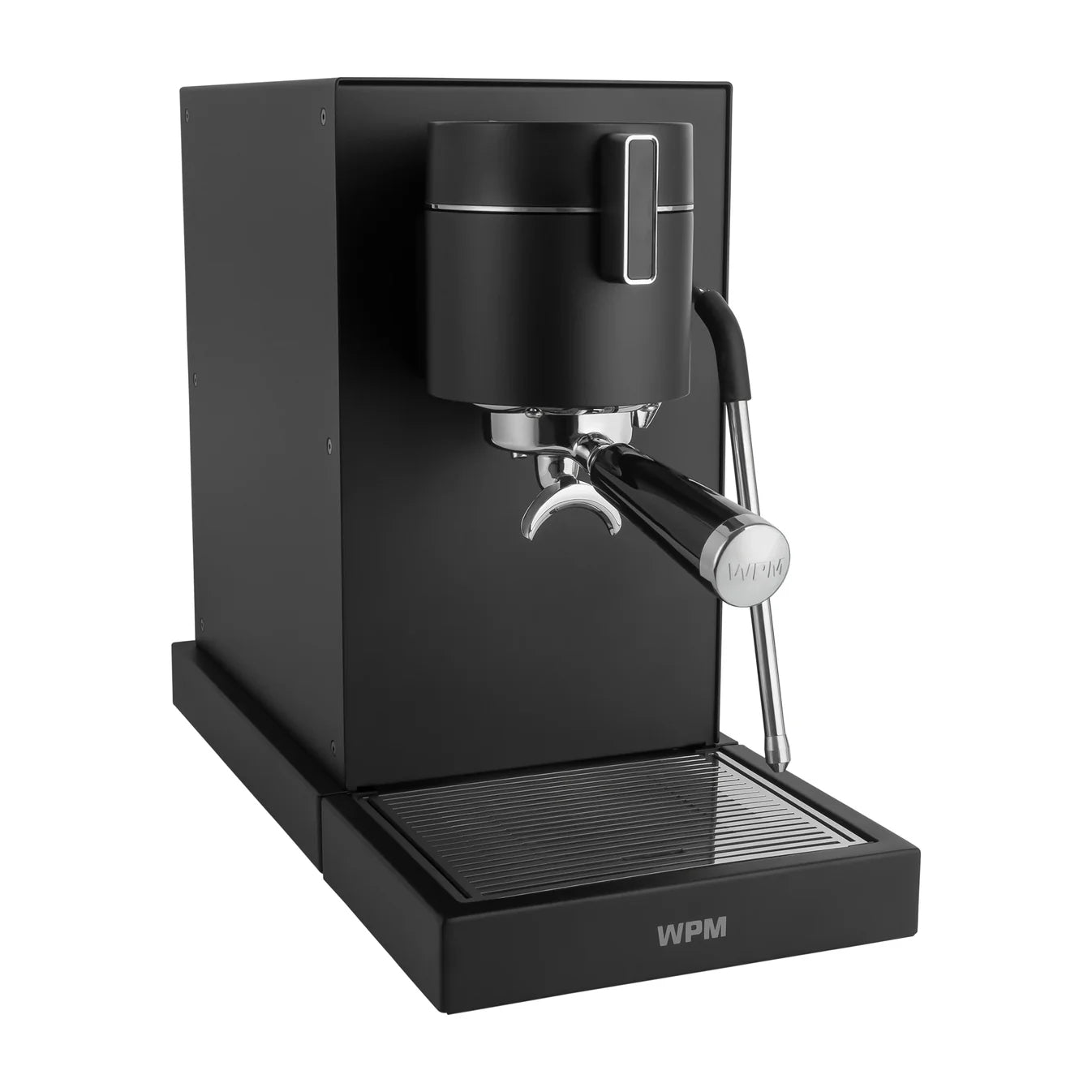
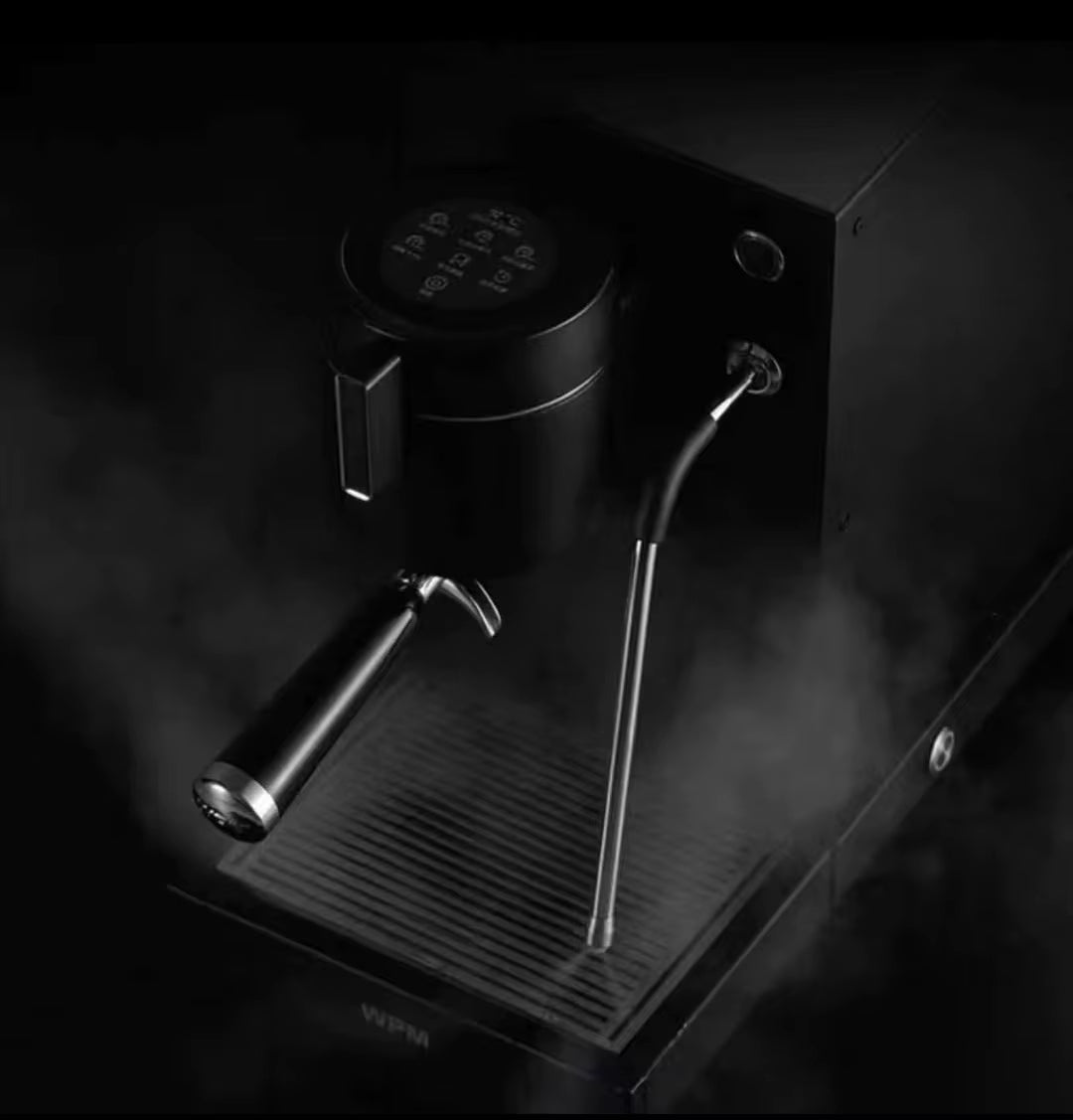
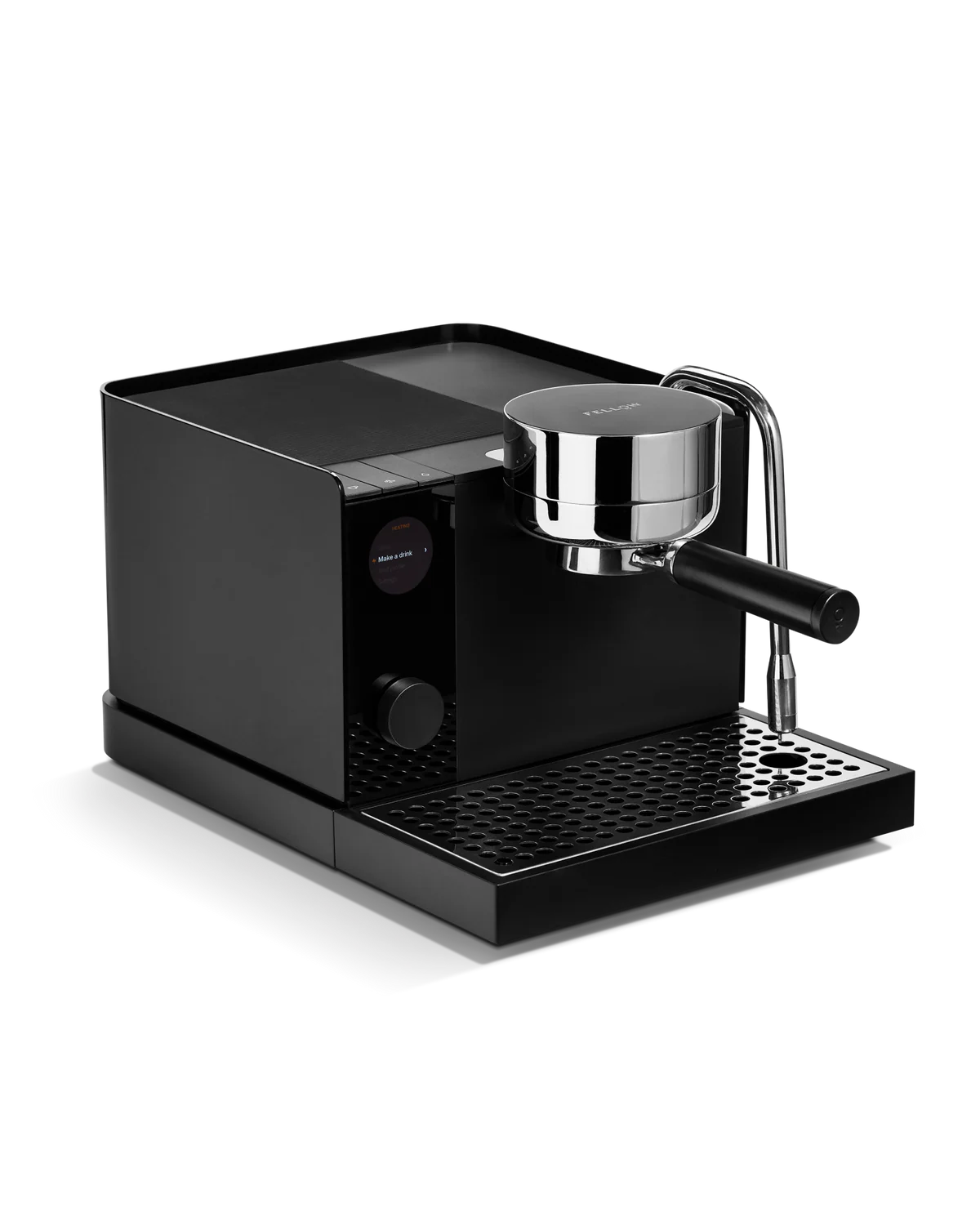
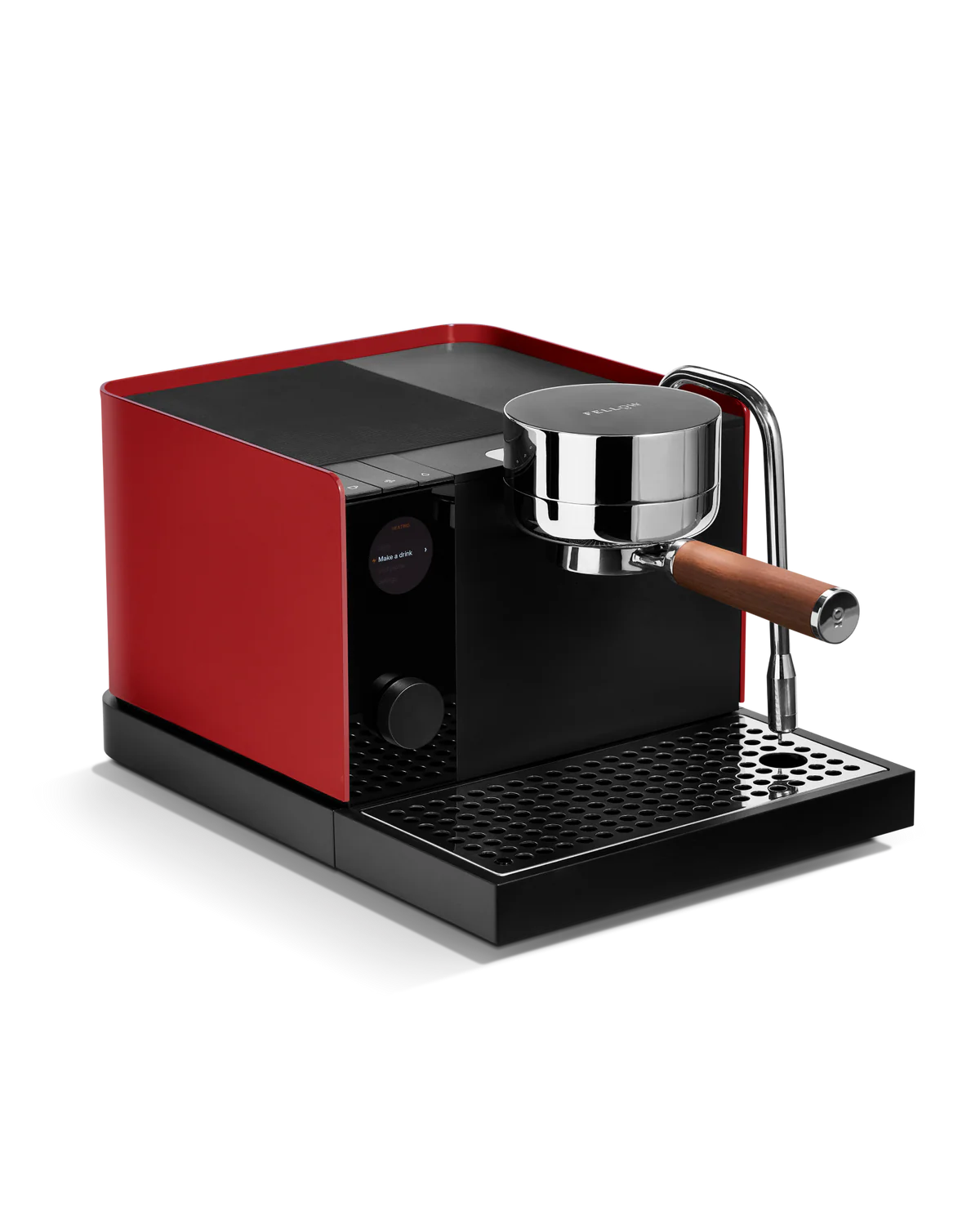
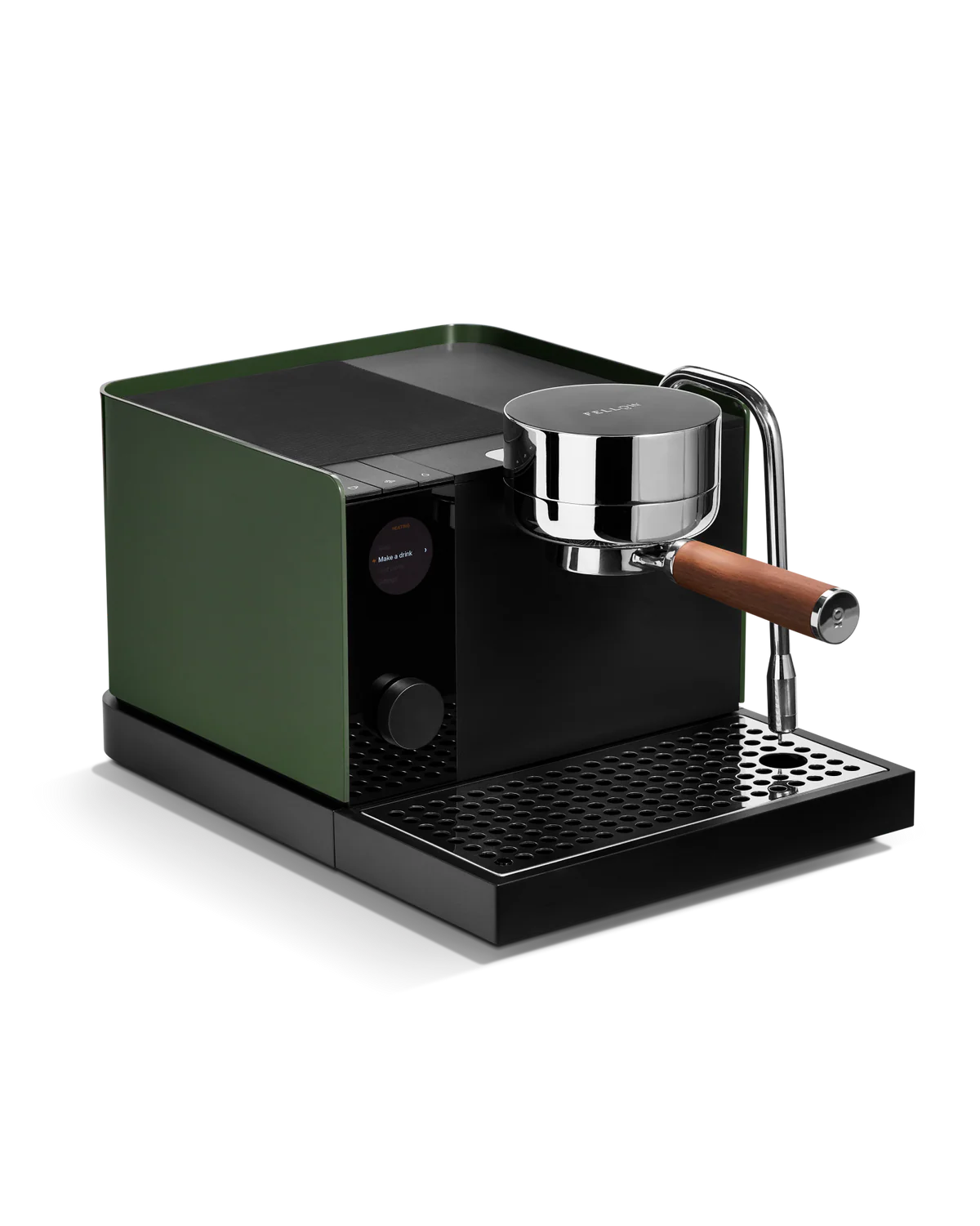
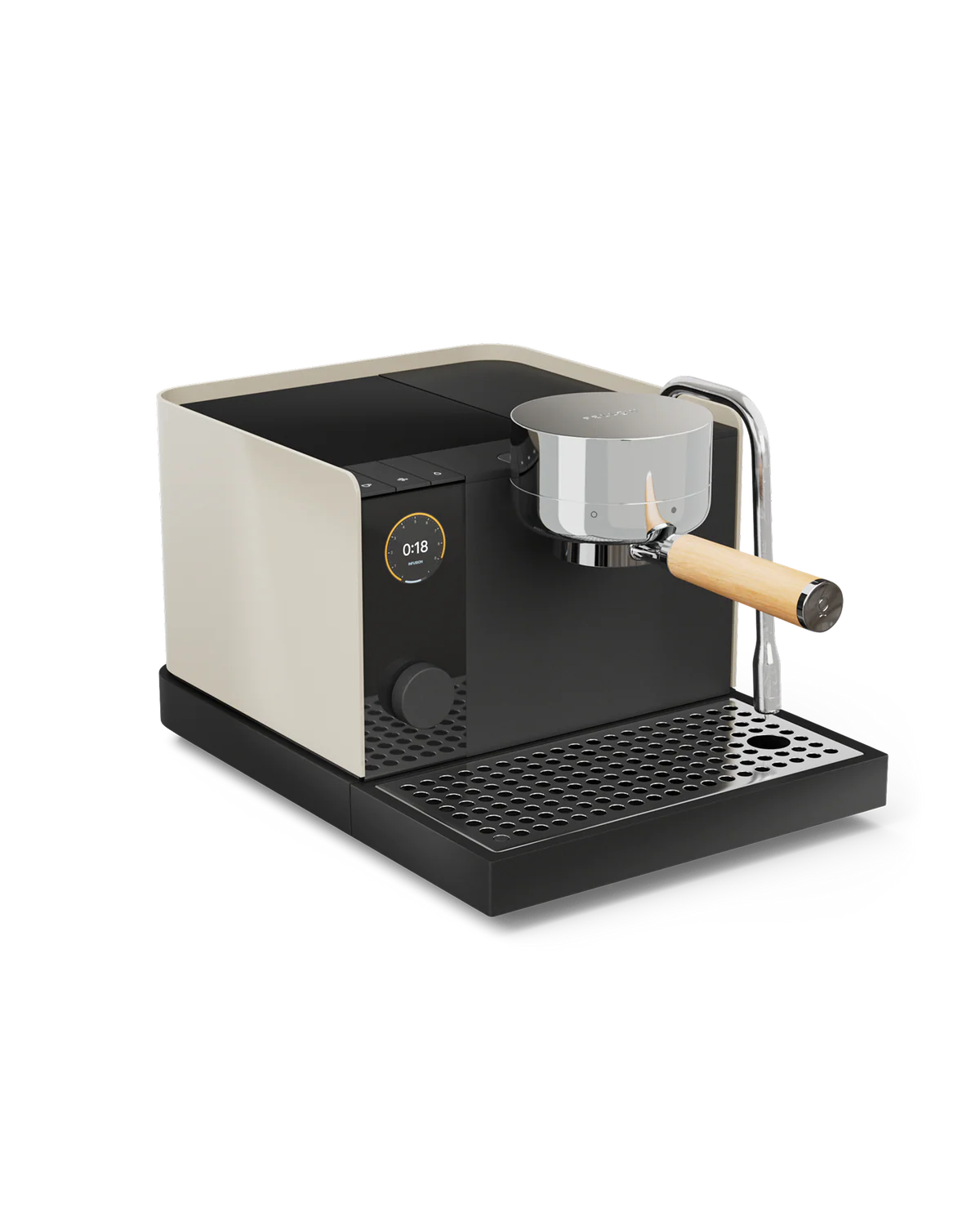
Start with the body. The Fellow Series 1 is built around a molded ABS plastic shell with metal and silicone internals, with wood accents on some colors. The WPM Primus has a stainless-steel body, a 316L stainless saturated group head, and a stainless boiler. You feel that difference the moment you lift them, and you live with it for years.
Then the controls. The Fellow leans on a circular colour screen, a rotary dial, three piano keys, and a companion app. The Primus puts a circular touchscreen and a rotating collar right on the group head, shows live pressure and flow on the display, and skips the phone entirely. One is designed like a consumer gadget. The other is designed like a small commercial machine.
Both are hybrids, and this is worth saying plainly: neither is a true dual boiler, no matter what some product listings claim. The Fellow uses a patented "Boosted Boiler," a small boiler fed by an inline thermoblock pre-heater plus a separately heated group. The Primus pairs a 0.8-litre boiler with a PID brew thermoblock and a dedicated SuperSteam thermoblock. The practical upshot: the Primus can brew and steam at the same time, and the single-boiler-class Fellow switches between the two very fast instead.
Gear pump vs vibration pump: the real difference
A gear pump delivers pressure smoothly and quietly by meshing rotating gears, while a vibration pump uses a pulsing electromagnetic piston. For pressure profiling, a gear pump can hold and change pressure with more precision and far less noise, which is why you normally find them in machines costing far more than the Primus.
The WPM Primus uses a gear pump, the kind commercial machines run, giving real-time pressure and flow profiling from 1 to 12 bar in 0.1-bar steps. You can run it in pressure mode or flow mode, switch between manual, semi-automatic, and fully automatic, and save your favourite recipes for one-touch recall. If you want to understand why varying pressure during a shot changes the cup, our guide to pressure and flow profiling walks through the science.
The Fellow Series 1 runs a vibration pump rated to 15 bar and calibrated to around 9 bar, then uses software to shape pressure, flow, and temperature across pre-infusion, infusion, and ramp-down. It genuinely profiles. But it profiles by dimming the pump electronically rather than by driving a gear pump mechanically, so it is the more software-led, less hardware-led of the two approaches. For a beginner, the Fellow's method is easier to grasp. For someone chasing repeatable control, the Primus gives you the better instrument.
Which one makes better espresso?
In careful hands, both machines make café-quality espresso, and the difference in the cup comes down to control rather than a quality gap. The Primus gives you finer, more repeatable command over pressure and flow, which helps most with tricky light roasts. The Fellow makes a great shot easier to reach for a newcomer thanks to guidance and fast, stable temperature.
The honest answer is that your grinder and beans decide more than either machine does. Give both the same well-dialed puck and the cups will be close. Where the Primus pulls ahead is the ceiling: real gear-pump profiling lets an experienced barista extract a stubborn light roast more evenly. Where the Fellow pulls ahead is the floor: its guidance gets a beginner to a balanced shot faster, with fewer wasted grams along the way.
So "better" depends on who's holding the portafilter. A confident tinkerer will coax more out of the Primus. A first-timer will get more consistent results, sooner, from the Fellow.
Which is better for light roasts?
The WPM Primus is the stronger choice for light roasts. Light roasts are dense and prone to channeling under a hard, flat 9-bar hit, so they reward a gentle pre-infusion and a controlled lower peak, exactly what a gear pump delivers well. The Primus also reaches a higher brew temperature (up to 98°C versus the Fellow's 94°C cap), which helps with very light, hard-to-extract beans.
That 4-degree difference sounds small and isn't. Light roasts often want the top of the temperature range to extract sweetness instead of sour, green notes. The Fellow's 94°C ceiling is fine for medium and darker roasts, and most beginners drink those anyway. But if you already know you love bright, fruit-forward light roasts, the Primus gives you more room to get them right.
Which has better build quality and longevity?
On materials and serviceability, the WPM Primus is the more durable, more future-proof machine. Its full-metal body, metal group, stainless boiler, commercial gear pump, plumb-in option, and user-updatable firmware all point toward a machine you keep. The Fellow Series 1, by contrast, is a premium appliance: beautifully made, but plastic-bodied, tightly integrated, sealed, and not designed for owner repair.
Be careful with the word "prosumer" here, because neither machine is a classic E61 or dual-boiler you can rebuild for twenty years with parts from a dozen suppliers. Both use proprietary portafilters and tightly packed electronics. The Primus simply sits much closer to the prosumer end (metal, gear pump, plumbable, updatable) while the Fellow sits at the premium-appliance end (integrated, proprietary, replace rather than repair).
Two honest cautions, because we'd rather you trust us than be surprised later. Both machines launched in 2025, so genuine long-term reliability data does not exist yet for either, and most longevity talk is informed guesswork. The Fellow's first production run drew early-bug complaints in enthusiast forums, and its plastic, sealed design raises fair questions about what happens once it's out of support. The Primus's main open question is the LCD mounted directly above the group head, where heat over years is an unknown, though no failures have been documented. We're flagging both so you can weigh them yourself.
Is the WPM Primus worth the extra money?
For most buyers planning to keep one machine for years, the roughly €380 premium for the WPM Primus is worth it. You are paying for a commercial-grade gear pump, a full-metal build, simultaneous brew and steam, plumb-in capability, and a higher temperature ceiling, hardware advantages that typically live in machines well above this price.
Put the gap in context. The Primus costs about 25% more than the Fellow, and in return you move from a plastic appliance with a vibration pump to a metal machine with a gear pump and café-style profiling. If your honest plan is "I want to get serious and not re-buy in two years," that's money well spent. If your honest plan is "I want to try this hobby without overcommitting," the premium is harder to justify, and the Fellow makes more sense.
Which is better value?
Value depends entirely on your time horizon. For pure upfront value and accessories-per-euro, the Fellow Series 1 wins: it's cheaper and ships with a generous bundle including a bottomless portafilter, multiple baskets, a shot splitter, and more. For long-term value measured over years of daily use, the WPM Primus wins on hardware that should age better.
There's no single right answer, which is why we keep splitting it by buyer. A beginner testing the waters gets more value from the Fellow today. A committed home barista gets more value from the Primus over the life of the machine. Same two products, two different definitions of "worth it."
Which should you buy?
Buy the WPM Primus if you want one machine for the long haul, value build quality and repair-friendliness, drink light roasts, or know this hobby will stick. Buy the Fellow Series 1 if this is your first serious machine, you want app guidance and the gentlest learning curve, you prefer a compact plastic-bodied design that's easy to live with, or you're placing a pre-order and want the lower price.
Quick decision guide:
- Pick the WPM Primus if: you want future-proof hardware, gear-pump profiling, simultaneous brew and steam, plumb-in capability, and the better light-roast machine.
- Pick the Fellow Series 1 if: you're new to espresso, want guided shot feedback and an app, prefer a lower entry price, want a compact footprint, and like the idea of a polished countertop appliance.
- Either works if: you're buying a capable profiling machine from people who'll support you after the sale, you just want the one that fits how you actually make coffee.
What Vellutto recommends
Vellutto recommends the WPM Primus for most people, and the Fellow Series 1 for beginners. We sell both, so this is not a neutral ranking, but it is an honest one: the Primus is the machine more buyers will be glad they bought in three years, and the Fellow is the friendlier first step for someone just entering the coffee world.
If you're still unsure, tell us how you drink your coffee and how far you plan to take the hobby, and we'll point you to the right one. You can pre-order the WPM Primus here or the Fellow Espresso Series 1 here. Both ship insured across the EU and EEA with a two-year warranty.


Full specifications, side by side
| Spec | Fellow Espresso Series 1 | WPM Primus |
|---|---|---|
| Price (Vellutto) | €1,499 | €1,990 |
| Heating | "Boosted Boiler": small boiler + inline thermoblock pre-heater + heated group (single-boiler class) | Hybrid: 0.8 L stainless boiler + PID brew thermoblock + SuperSteam thermoblock |
| Brew + steam at once | No (fast switchover) | Yes |
| Pump | Vibration, 15-bar rated, ~9 bar calibrated | Commercial-grade gear pump |
| Pressure profiling | Software across pre-infusion / infusion / ramp-down | True real-time, 1–12 bar in 0.1-bar steps, pressure or flow mode |
| Saved profiles | App-based custom profiles | Up to 20 (WPM's own FAQ cites 30) |
| Temp range | 50–94 °C | 70–98 °C (±1 °C) |
| Warm-up | Under 2 min (boiler) | ~3–5 min |
| Group | 58 mm bottomless included | 58 mm saturated 316L stainless; proprietary handle, standard baskets fit |
| Water | ~2 L top-fill tank, reservoir only | 1.8 L reservoir + plumb-in option |
| Body | Molded ABS plastic + metal/silicone internals | Stainless steel |
| Control | Colour LCD + dial + piano keys + app | Circular touchscreen + rotating collar on group; no app |
| Firmware | Pushed by Fellow | User-updatable via Wi-Fi |
| Dimensions | 438 mm L × 315 mm W × 279 mm H | 490 × 235 × 400 mm |
| Weight | 9.8 kg | 21.5 kg |
| Released | US late 2025; EU mid-2026 | 2025 |
Frequently asked questions
Is the Fellow Series 1 a dual boiler?
No. The Fellow Series 1 is a single-boiler-class machine using a patented "Boosted Boiler": a small boiler fed by an inline thermoblock pre-heater, plus a separately heated group. It switches between brewing and steaming very quickly but cannot do both at once. Some listings call it a dual boiler; that is incorrect.
Is the WPM Primus a dual boiler?
No. The WPM Primus is a hybrid: a 0.8-litre stainless boiler, a PID-controlled brew thermoblock, and a dedicated SuperSteam thermoblock. That hybrid design does let it brew and steam at the same time, which is why some retailers loosely call it a dual boiler, but WPM's own materials describe it as a hybrid.
What's the difference between a gear pump and a vibration pump?
A gear pump moves water by meshing rotating gears, giving smooth, quiet, precise pressure. A vibration pump uses a pulsing electromagnetic piston, which is cheaper and more common but noisier and less precise. The Primus uses a gear pump; the Fellow uses a vibration pump with software pressure control.
Which makes better espresso, the Fellow Series 1 or the WPM Primus?
Both make excellent espresso with a good grinder and fresh beans. The Primus offers finer, more repeatable control that helps most with light roasts, while the Fellow makes a balanced shot easier for beginners through guidance and stable temperature. Your grinder and technique matter more than the gap between them.
Is the WPM Primus worth the extra money over the Fellow?
For buyers keeping one machine for years, yes. The price difference premium buys a commercial gear pump, a full-metal body, simultaneous brew and steam, plumb-in capability, and a higher temperature ceiling. For someone testing the hobby without overcommitting, the cheaper Fellow is the more sensible buy.
Which is better for light roasts?
The WPM Primus. Light roasts channel under a hard flat 9-bar shot and reward a gentle pre-infusion with a controlled lower peak, which the gear pump delivers well. The Primus also reaches 98°C versus the Fellow's 94°C cap, giving more room to extract bright, dense light roasts properly.
Which has better build quality and longevity?
The WPM Primus, on materials and serviceability: full metal body, metal group, gear pump, plumb-in, and user-updatable firmware. The Fellow is a premium appliance with a plastic body and sealed, proprietary design. Both launched in 2025, so long-term reliability data does not exist yet for either.
Which should a beginner buy?
A beginner who wants the gentlest start should buy the Fellow Series 1 for its guidance, app, lower price, and forgiving learning curve. A beginner who expects the hobby to stick should consider the WPM Primus so they don't outgrow their first machine. Both let you start on a simple preset while you learn.






Share:
Pressure profiling for espresso: complete guide
Wendougee DATA S or LITA BA: Which Profiling Espresso Machine To Buy?